The Best Puzzle for GMs that Don't Like Puzzles
The Nine Cups Puzzle will challenge your players without bringing the session to a halt. Plus, it's fun and funny.

I don’t particularly love to shoehorn traditional puzzles into my tabletop campaigns. You either spend ages just to make something that’s too easy—which results in the party breezing past the puzzle—or you make something so hard that it softlocks the session.
Fundamentally, my issue with most standard “dungeon puzzles” is that solving them is a binary affair. The players either find the solution, or they don’t.
Despite this, I do love to switch up the pacing in my campaigns. If you’re regularly transposing the mode of play, you should sometimes give your party puzzles. With all that: here’s my favorite puzzle. It’s fun and funny, the outcome is non-binary, and yet it does require some good deductive reasoning. Here’s the Nine Cups Puzzle.
Setup
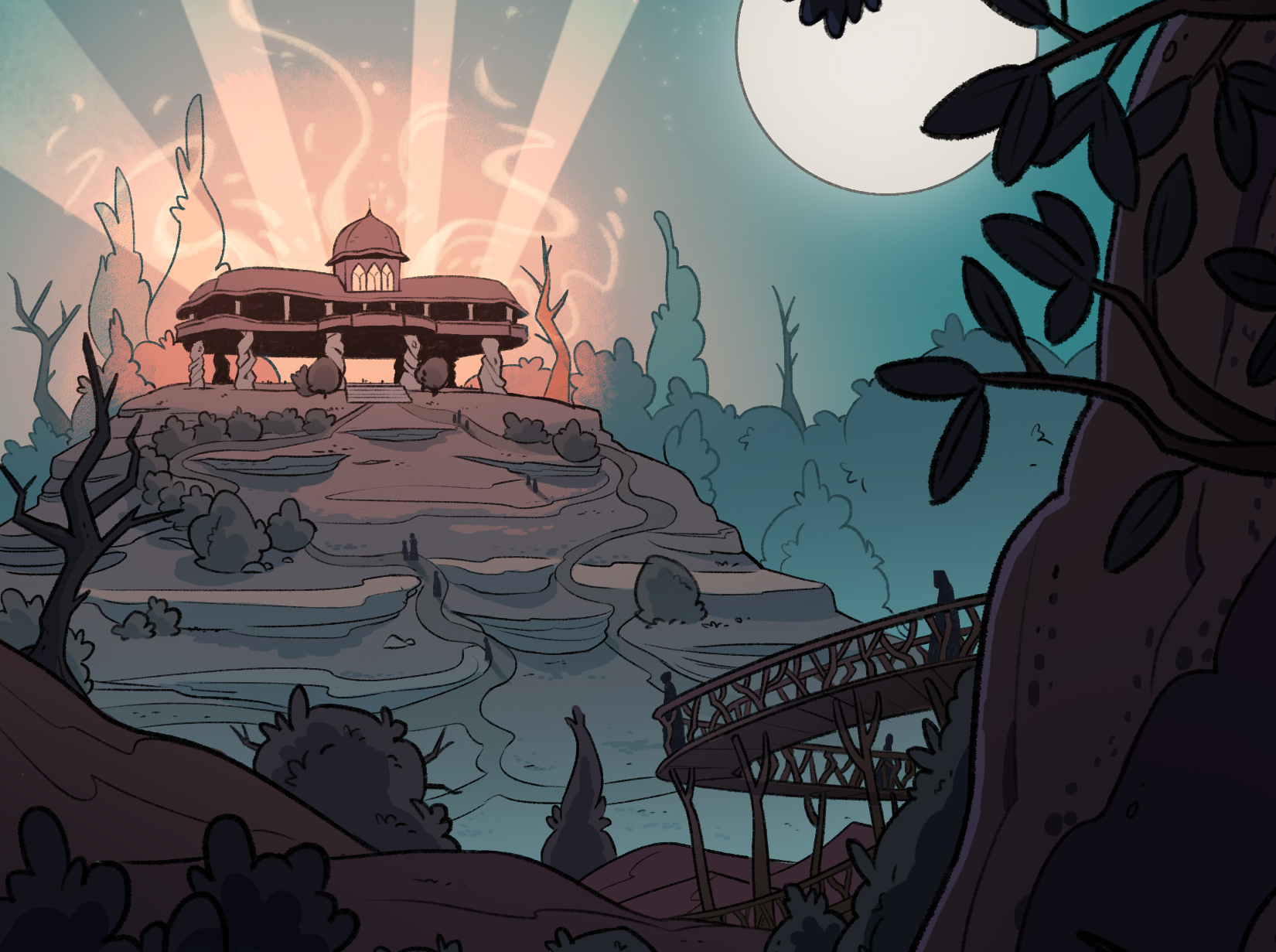
The party enters a room in a tricksy dungeon (probably fae, but I’ve also used this puzzle in a genie castle). An agent of the dungeon’s boss sits at a table with 9 numbered cups. This agent—let’s call him Puck—says that the only way to progress past him and into the next room is for everyone present to drink from one of the cups. The party must also tell Puck which cup he must consume.
Puck explains that one of the cups is filled with a poison that will instantly kill whoever drinks it. Other cups may also have deleterious effects, but some are neutral or beneficial. All of the liquids look exactly the same, and there is no way to detect what a certain cup’s liquid will do before drinking it. Puck knows what is in each cup.
For fae dungeons, throw on my DnD Enchanted Spotify playlist.
Rules
Before selecting a cup, the party may ask five yes or no questions. Puck must answer these truthfully. After the party has asked their five questions, they tell Puck which cup he must drink, and then everyone drinks their cups at the same time. So long as there are fewer than 9 people in the room, one or more cups will not be consumed.
How you “balance” the cups is up to you. I have used this puzzle a few times, and I usually use the following cups:
- 1 cup kills instantly
- 2 cups inflict lesser negative effects (one of which might be resisted with a saving throw)
- 1 cup has a randomized effect (e.g. rolling on a wild magic table)
- 1 cup is just water
- 1 cup bestows a different effect depending on the race or species of whoever drinks from it
- 3 cups bestow buffs (1 temporary, 2 permanent)
You can absolutely tweak this exact balance to suit your campaign, but a roughly even split between good, bad, and neutral works best. You can also get rid of the slightly random ones to minimize chance, or just to avoid scenarios in which Puck has to say “I don’t know” or “it depends” to a question.
As a rule of thumb, the more players in the party, the more the cups should give beneficial or neutral effects (as more of them will need to be consumed). For a smaller party, you might also reduce the number of questions they may ask to four.

Solving the Puzzle
The party must absolutely not consume the cup that will kill them. They may try to suss out which cups will be most beneficial, but their primary objective (of course) is to not consume the death cup.
Accomplishing the basic task of not consuming the death cup is actually surprisingly easy. Let’s say you have a party of five PCs. They ask “is the death cup in cups 1-4?” If Puck says yes, then they’ve already won, as they can just drink through cups 5-9 and guarantee they won’t die. They can now use their remaining questions to either suss out which cups they should drink from, or narrow the search for the death cup so as to give it to Puck.
Moving forward, they can ask really simple questions like “will cup 5 give either a beneficial or neutral outcome?” or “are any of cups 7-9 harmful?” Crucially, there is no TRULY optimal strategy for the questions after this point for 2 reasons:
- It is impossible for the party to determine with certainty whether every single cup is positive, neutral, or harmful with only 5 questions
- The party may have any of 3 separate “sub-goals” after ruling out the death cup:
- Maximize the number of positive cups consumed
- Minimize the number of harmful cups consumed
- Ensure Puck drinks the death cup
Thus, this game is mostly fair, so long as you accept that the party cannot choose 100% optimally. Plus, it still requires a bit of clever deduction, and the outcome is wholly non-binary.
Running the Puzzle
You want to know the best part about this puzzle? It’s Puck! This is a puzzle where you get to also roleplay a silly conversation with a goofy NPC. I’ve always made my version of Puck in this puzzle a total chaotic weirdo. I’ve also usually roleplayed him as desperately seeking death—but like… in a funny way. That makes the party really want to give him the death cup (thereby making it harder for them to focus on giving themselves buffs). Adding in a goofy character to a puzzle dramatically helps puzzle pacing, as the party gets to engage in some charming banter while figuring out their ideal solution.

For added pressure, add a time constraint. I once ran this puzzle while the party was trying to fend off a never-ending horde of enemies, and I said that they can’t do anything else with their turn if they focused on asking Puck a question. The party had to split duties as they held back their foes while trying to advance through the puzzle and into the next room as quickly as possible.
Let me know if you’ve ever encountered a variant of this puzzle before. I love it, but I can also see why true puzzle aficionados might scoff at the fact that it can’t be truly “beaten.” Let me know how you’d tweak it in the comments! And please use this puzzle in your sessions and let me know how it goes!