Motivate Thoughtful Play with Tokens
Tokens encourage the sort of play you want to see at your table. Use them to empower your players and ensure your tabletop campaign stays on track.


In my first economics textbook, Paul Krugman pointed out that the phrase “people respond to incentives” is a tautology. That is: an incentive is definitionally something that motivates behavior. The real question is not whether incentives work, but which behaviors you want to reward and how.
Ideally, your TTRPG players are intrinsically motivated to play in your tabletop adventures in ways that suit the table. The players inhabit their characters deeply, cooperate with one another, act strategically, and accept the realities of the world you’ve created. When all of that happens without guidance, it’s magical. Sometimes, however, there’s a gap between the ideal play experience you hope to facilitate and how the players actually engage with the campaign. When in doubt, this is when you can deploy some extrinsic motivation, and my favorite catch-all motivator is the token.
A token is a currency that a GM rewards when players play the game in a way that ought to be encouraged. It can be spent by players for whatever purpose the GM allows. In practice, this means the GM can subtly motivate the players to play in a certain way by dangling an in-game resource in front of them.
That’s it? Yeah, that’s it! The concept is remarkable simple, and lots of RPGs already have some version of this built in to the rules, but I want to talk about more flexible and creative uses of tokens in your games. Specifically, I want to advocate for the following:
- Bestow tokens using transparent rules
- Use tokens to align the values of the players with the philosophy of the GM
- Give player a limited amount of authorial power
First, though, let’s take a look at few opposing examples before we can triangulate some best practices.
Why not give our most popular playlist a listen? DnD Calm is filled with relaxing fantasy music to evoke all the right moods in your campaigns.
A Simple Place To Start: DM Inspiration
Many of you are probably familiar with a basic implementation of tokens. Dungeons & Dragons uses DM Inspiration, or “Heroic Inspiration” in the 2024 rules. The idea is that the dungeon master can toss a player a single use of rolling with advantage that they can use whenever they want. The 2024 Dungeon Master’s Guide specifies that you can deploy Heroic Inspiration “to incentivize the kind of behavior you want to see in your game, such as acting in character, taking risks, thinking strategically, cooperating well, or embracing the tropes of a particular genre”.
I think this system is fine. The reward is modest, and the proposed use cases are pretty flexible. The section further specifies that “any player who makes the whole table erupt in laughter, cheers, or howls of surprise probably deserves Heroic Inspiration.” I like this rule, and it’s in line with how I first gave out inspiration when I was a baby dungeon master.
Instead of reflexively saying “D&D bad” I want to propose a deepening of this mechanic inspired by systems from other games and my own experiences. D&D’s tokens are simple and low-stakes, but they add so little to the actual game.
The Big Boy: Fate Tokens
The RPG Fate makes narrative tokens a key aspect of its game design, and thus it functions as a dramatic counterpoint to D&D. The system uses “fate points” to power three distinct player abilities:
- Invoke an aspect (letting your character’s background assist in a roll)
- Declare a story detail (seemingly very powerful, though described vaguely)
- Activate “stunts” (i.e. special moves)
Players get a set amount of fate points at the start of every session/scenario. To earn additional fate points, players must accept narrative complications that match the backstory they’ve given their character.
I love that Fate tries to get as much mileage as possible out of one currency, but I find this system a bit messy. Getting fate points automatically each session undermines the sense that tokens should be rewards for encouraged behavior, and having to accept narrative complications in exchange for more seems limiting. Why not reward players for properly roleplaying? That is: why does it have to be tied to a narrative drawback decided by GM fiat?
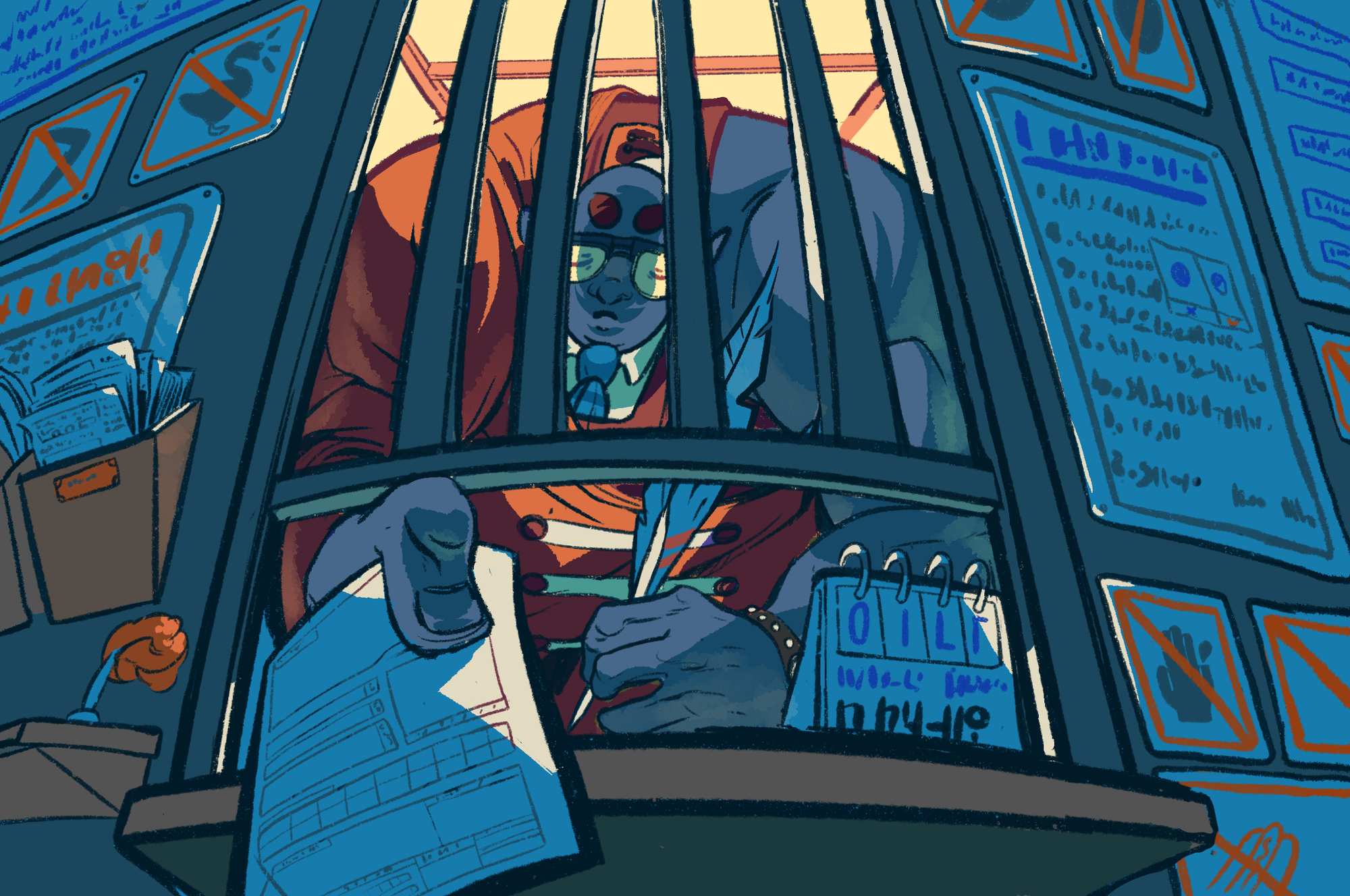
I can’t imagine many players are going to be stoked if their GM says “your character is impulsive. Do you want to accept a fate point in exchange for doing something stupid right now?” Is that roleplaying? Or is that just acquiescing when your GM proposes an obnoxious bargain?
Likewise, using tokens for either a numerical advantage, a purely narrative tweak, or the use of special abilities feels clunky. If I were playing in a Fate campaign, I can’t imagine I’d ever do anything but save my points for story details, and that feels like a bummer of a tradeoff. These three uses are not equivalent, and while players might weight their relative values differently, using a communal resource that is earned via honest roleplaying is mechanically incongruous.
Put simply: fate points try to do too many jobs at once, and thus their purpose (encouraging good roleplaying and giving players narrative agency) becomes muddled.
A Deeper Example: Frontier Tokens
I recently completed a multi-year campaign set in a “fantasy wild west.” This sort of setting and its associated genre tropes often end up exploring fraught themes, and the typical “wild west adventurer” archetype tends to fall into icky colonialist tropes. I really wanted to use this setting and this genre, but I also wanted to make sure my players didn’t accidentally wind up as imperialist stooges through sheer genre inertia.
Enter the frontier token.
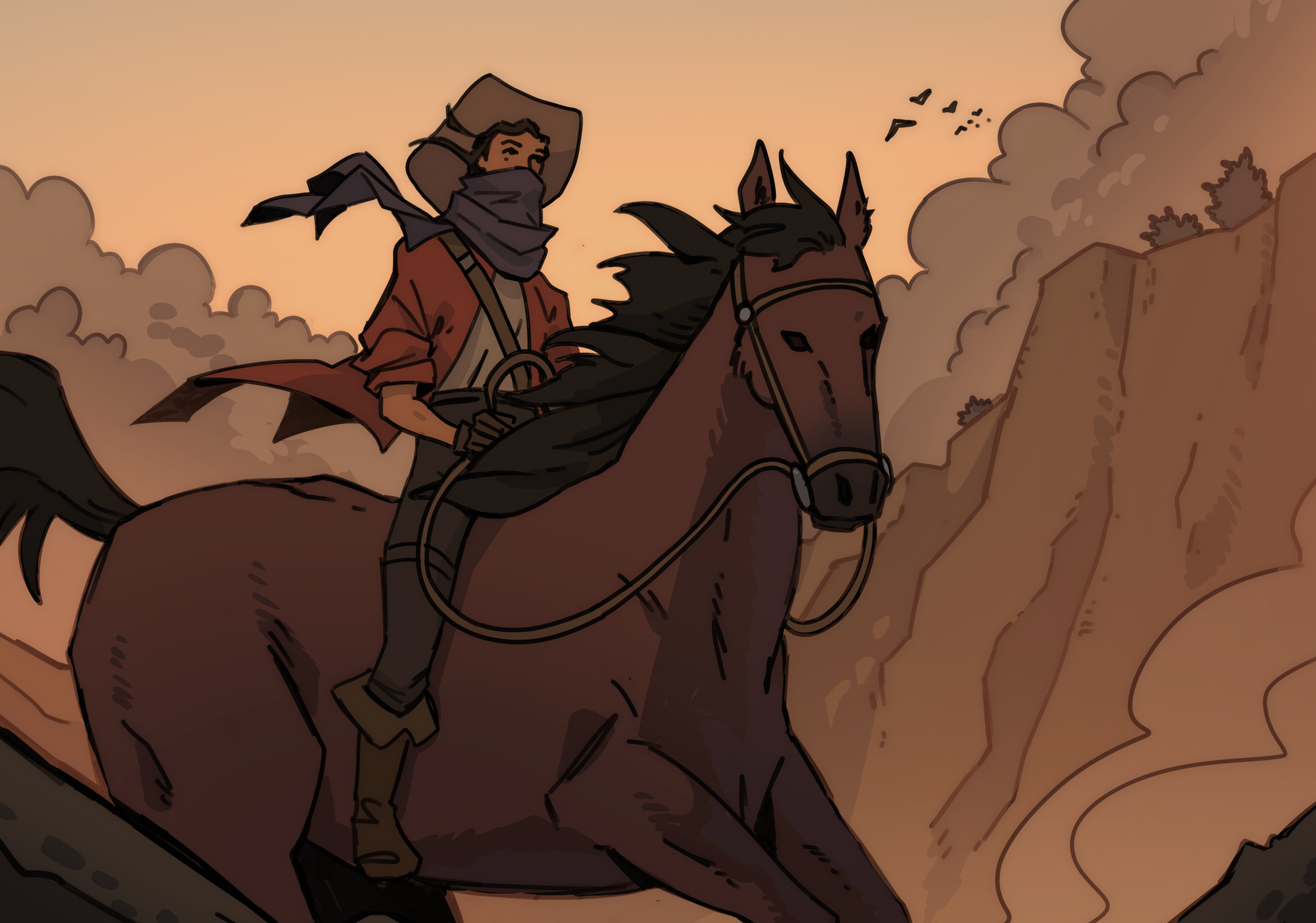
Awarding Frontier Tokens
I awarded players with a token whenever they did something bold and anti-colonial.
I certainly didn’t want to railroad my players, so I was careful in my wording. That is, I didn’t want to just say “get a token every time you kill a colonizer” or “get a token when you take the side of indigenous people.” I wanted my players to feel empowered to play their characters the way they wanted, but we also all agreed upfront that undermining imperial power structures was something we obviously wanted to encourage.
Importantly, this incentive didn’t just help prevent against problematic roleplaying. It also facilitated a consistent raising of the stakes. To be bold and to resist imperial powers necessarily meant the party repeatedly positioned themselves as underdogs. They picked fights that were tough to win, and they were also motivated to go for more exciting strategies instead of accepting simpler compromises. I never limited what they could do, but the incentive structure ensured that fun decisions were always rewarded.
Expending Frontier Tokens
Players could expend tokens for one of three purposes:
- Declare that an NPC they’ve just met has a certain personality trait (trusting, daring, playful, etc.)
- Declare what type of terrain exists within a newly entered hex
- Narrate a Blades-in-the-Dark-esque flashback to help the odds in a dire situation
Notice anything about these use cases? Whereas D&D’s inspiration offers a strictly mechanical bonus and Fate’s rewards are all over the place, frontier tokens provide purely narrative advantages. Yes, using a token to say that an enemy guard is forgetful provides the party with a meaningful upper hand, but that’s more for plot reasons than something purely numerical like an extra roll of a die.
This is a more appropriate and symmetrical implementation of tokens, as you’re rewarding narrative play (bold anti-colonial actions) with narrative rewards (the ability to directly influence the game world). More importantly, when you give your players limited authority to directly influence the game world, you’re empowering your players to contribute to worldbuilding while still keeping control of the big picture. For my money, that’s an ideal balance.
Best Practices
Here are my three big pillars for how best to employ tokens.
- Use specifically defined reward triggers to encourage play that you want to see at the table
- Reward narrative play with narrative rewards
- Ensure players understand and agree to the reward triggers
So long as you follow these three rules, you have quite a bit of flexibility in what behaviors you reward, what players can do with their tokens, the frequency of token rewards, and the power of any individual token. Maybe more powerful uses require more than one token, or maybe players can pool their tokens for extreme results. Consider what levers you want to give your players and which you’d rather keep for yourself. For example, in my frontier campaign, I did not want my players to have the ability to change character motivations, nor to affect the specifics of the main city—their ability to influence hexes only applied to the frontier beyond the home base.
Final Thoughts and Common Pitfalls
Okay, so you’re starting up a campaign. You know the behaviors you want to reward. You know the types of narrative control you want to give your players. What can go wrong? Well… quite a bit, actually. Luckily, I’ve got some quick tips to help keep this mechanic smooth and impactful.
Don’t railroad your players. Encourage broad behaviors. Don’t be so specific that your players feel as though their actions are meaningfully constrained.
Avoid quibbling. You’re the GM. You’re allowed to say “no” if a player wants to expend a token for something that breaks the game. However, try to offer compromises instead of outright refusing the suggestions your players make.
Make the rewards meaningful. If the token’s use cases are too narrow or minor, they will not function as effective incentives. The players need to want tokens for them to properly motivate desired behaviors.
Check in with your players. Do they think you’re being too stingy? Are they frustrated with the reward triggers? Do they wish the tokens were more powerful? Just ask them! You don’t have to overhaul the whole system just because one of your players is greedy, but it’s worth taking the temperature.
If you follow my three pillars and use the strategies I just outlined, you’ll end up with a token system that your players will value and that will guide their play without steering it off of a cliff. Let me know in the comments if you come up with any clever triggers or rewards !